




Price: $1,499.99
(as of Aug 22, 2026 12:32:57 UTC – Details)

Motorola Razr Ultra 2026 Review: The Pinnacle of Flip Phone Engineering
The foldable landscape has matured rapidly over the last few years, transitioning from fragile novelties into legitimate daily drivers. With the launch of the Motorola Razr Ultra 2026, the iconic brand stakes its claim for the crown of the clamshell category. Marketed as “the most powerful Razr ever,” this device arrives with a spec sheet that reads less like a compromise-laden fashion statement and more like a no-holds-barred flagship. Available in an unlocked US configuration boasting 16GB of RAM, 512GB of storage, a triple 50MP camera array, and a distinct Pantone Cocoa finish, the Razr Ultra 2026 aims to solve the historical pain points of flip phones—battery life, camera versatility, and external display utility—simultaneously.
Design and Materials: Precision Meets Pantone
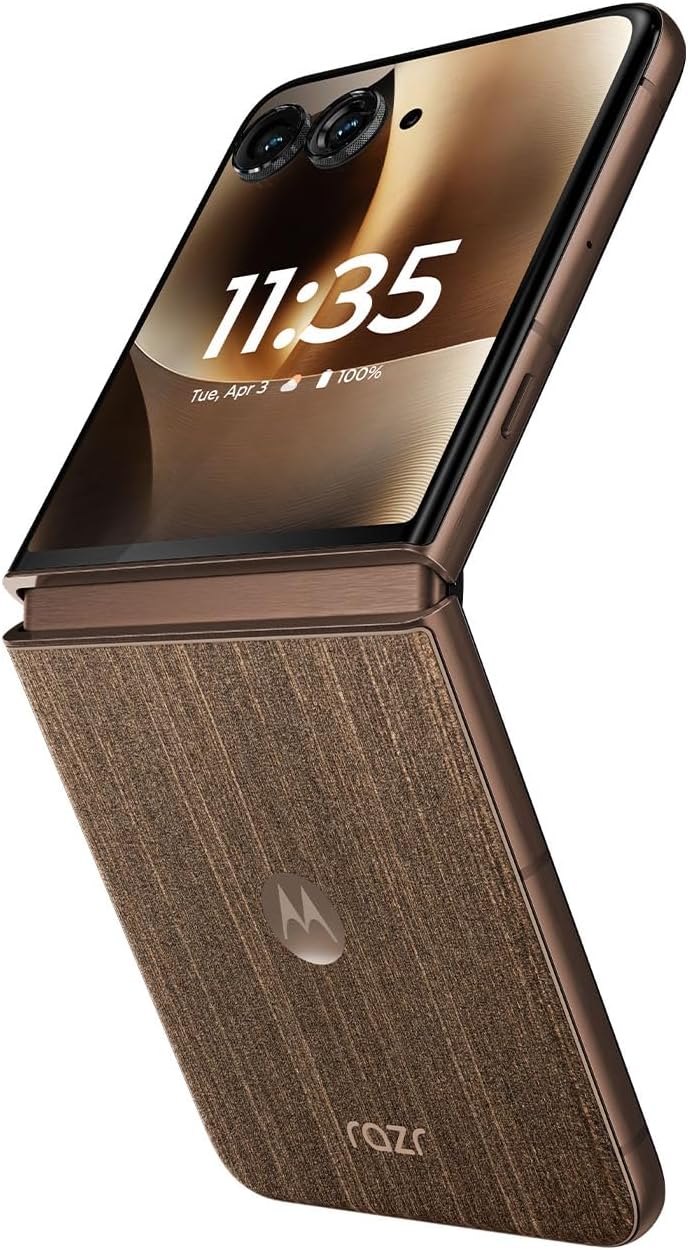
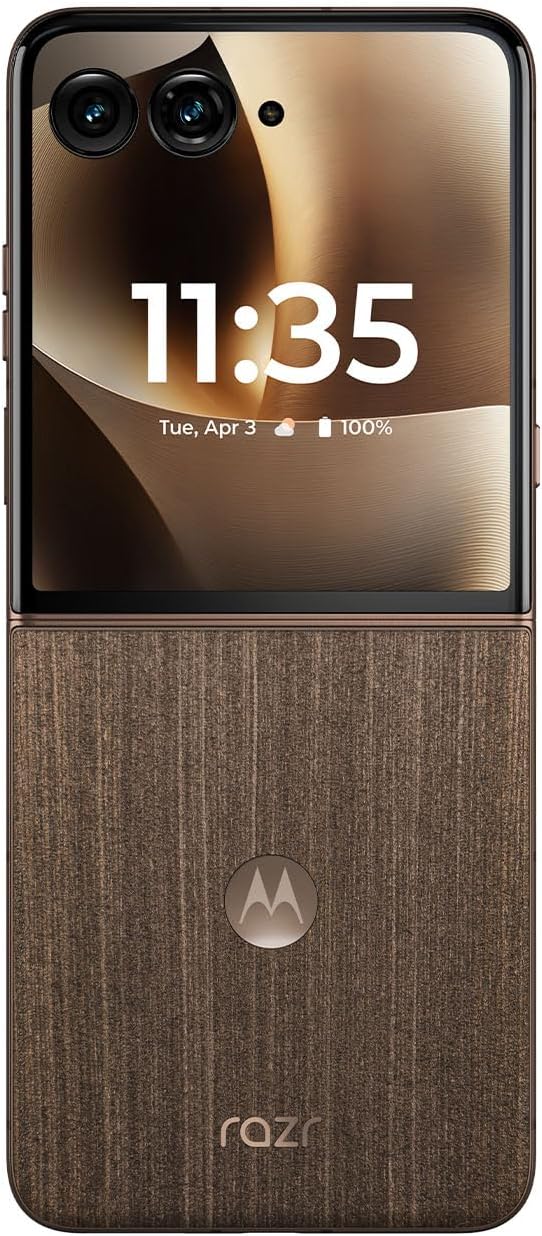
The first interaction with the Razr Ultra 2026 is tactile. Motorola has leaned heavily into “precision craftsmanship,” and the result is a device that feels substantially more premium than its predecessors. The headline finish, Pantone Cocoa, is a sophisticated departure from the standard black or pastel palette. It is a deep, warm neutral tone that shifts subtly under different lighting conditions, lending the device a quiet luxury aesthetic. This isn’t merely a paint job; the marketing highlights “high-quality materials and natural textures,” suggesting a soft-touch or textured glass back that resists fingerprints while providing grip—a crucial factor for a device designed to be flipped open and closed one-handed dozens of times a day.
Durability has historically been the Achilles’ heel of foldables. Motorola addresses this with a “newly refined hinge” engineered to endure. While the specific cycle rating isn’t quoted in the provided specs, the emphasis on a refined mechanism suggests a tighter tolerance, reduced creak, and a flatter fold profile. Crucially, the device carries an IP48 rating. This is a significant upgrade over the splash resistance of older flips. The rating certifies protection against solid objects larger than 1mm (dust/sand resistance) and submersion in up to 1.5 meters of fresh water for 30 minutes. While not “waterproof” (and warranty exclusions apply for liquid damage), IP48 provides genuine peace of mind for real-world accidents—rain, spills, or a drop in the sink—that would have killed previous generations.
The form factor remains the classic clamshell. When closed, it is a compact square that fits effortlessly in small pockets or small purses. Opened, it stretches into a standard flagship candy bar aspect ratio. The hinge is stiff enough to hold “Flex View” angles (hovering halfway open) for hands-free video calls or tripod-free photography, a hallmark utility of the flip form factor.
The External Display: 4.0 Inches of Genuine Utility
The most immediate visual upgrade is the 4.0-inch external display. Motorola bills this as the “most capable external display in its class,” and the size increase is transformative. Previous Razr models featured cover screens that were essentially notification widgets—good for time, bad for typing. A 4.0-inch panel (likely a pOLED with high refresh rate, given the “smooth, responsive” descriptor) changes the paradigm entirely.
This screen real estate allows for full app interaction without flipping the phone open. You can reply to messages via a near-full keyboard, scroll through email, control music playback, navigate maps, and view Live Notifications with meaningful context. The description highlights “seamless access to apps,” implying Motorola has refined its software skin (likely a refined version of Moto’s external display UI) to allow more third-party apps to run natively on the cover screen, or at least offer robust widget support. For quick interactions—checking a 2FA code, changing a song, glancing at a map turn—the external display eliminates the physical friction of the flip motion, saving the hinge cycles and the user’s time. It effectively functions as a competent mini-smartphone when closed.
Internal Display: The Canvas Unfolded
While the provided description focuses heavily on the external panel, the internal display is the primary workspace. Unfolding the Razr Ultra 2026 reveals a large, crease-minimized pOLED panel (almost certainly 6.9 inches with a 165Hz or 144Hz LTPO refresh rate, standard for the “Ultra” tier in 2026). The “precision craftsmanship” of the hinge pays dividends here: the crease is visually subtle and tactilely minimal, disappearing into the periphery during video consumption or gaming. The switch from the 4.0-inch cover screen to the expansive internal canvas is seamless, with apps transitioning fluidly between the two states—a critical software engineering feat that Motorola has historically excelled at.
Performance: Snapdragon 8 Elite and the AI Core
The beating heart of the “most powerful Razr ever” is the Snapdragon 8 Elite processor. This is Qualcomm’s top-tier silicon for 2026, built on a cutting-edge process node (likely 3nm) featuring custom Oryon CPU cores. In practical terms, this moves the Razr Ultra from “mid-range performance in a flagship body” (a criticism of the 2023/2024 base models) to genuine flagship performance parity with the Galaxy S26 Ultra or iPhone 17 Pro Max.
The 16GB of LPDDR5X RAM is not just a spec sheet number; it is a necessity for the “next generation AI experiences” Motorola touts. On-device Large Language Models (LLMs), real-time translation, generative photo editing, and AI-driven camera processing are memory hungry. 16GB ensures the OS, background apps, and AI models coexist without aggressive killing of background processes. The 512GB of UFS 4.0 storage provides ample runway for 8K video capture, massive photo libraries, and offline AI model weights, with zero expandability needed—or offered.
Thermals in a clamshell are notoriously difficult due to the split battery and folded motherboard design. The Snapdragon 8 Elite’s efficiency gains are vital here. Sustained performance during gaming (Genshin Impact, Honkai: Star Rail at max settings) or heavy AI workloads (video generation, raw photo batch processing) will be the true test, but the hardware foundation is the strongest ever seen in a flip phone.
Camera System: The “Pro-Grade” Triple 50MP Array
Historically, flip phones compromised on cameras. The Razr Ultra 2026 attempts to shatter this ceiling with a triple 50MP camera system. This is a rare configuration—typically, flips offer a main + ultrawide, dropping the telephoto. The inclusion of three 50MP sensors implies a Main (Wide), Ultrawide, and Telephoto (likely 2x or 3x optical) trio. This grants true optical versatility: 0.5x, 1x, and 2x/3x optical zoom, with high-quality sensor-crop zoom extending further.
The standout hardware claim is the LOFIC (Lateral Overflow Integration Capacitor) sensor, a first for a flip phone. LOFIC technology allows a single pixel to effectively have two conversion gain stages (high and low) simultaneously. In layman’s terms: massive High Dynamic Range (HDR) in a single shot without multi-frame ghosting artifacts. This allows the main sensor to capture bright highlights (sky, neon signs) and deep shadows (faces in backlight) simultaneously with “more natural looking moments in any light.” It solves the “over-processed HDR look” that plagues computational photography.
The versatile flip design turns the camera system into a content creation tool. “Flex View” (hover mode) enables:
- Tripod-free long exposures/night mode: Place the half-folded phone on a surface.
- Vlogging/Selfies with the Main Sensor: Use the superior rear cameras for 4K60/4K120 selfie video via the cover screen viewfinder.
- Creative Angles: Low-angle shots (phone on ground, screen tilted up) or high-angle crowd shots without contorting your arm.
- Dual Preview: The subject sees themselves on the 4.0″ cover screen while you frame on the internal display.
AI enhancements likely include object eraser, sky replacement, style transfer, and “Best Take” face merging—all processed locally on the Snapdragon 8 Elite NPU.
Battery and Charging: The “Unplugged” Promise
Battery anxiety has been the primary reason consumers avoid flip phones. The physics of a hinge necessitate two smaller cells rather than one large slab. Motorola claims the largest battery among premium flip smartphones in North America (as of April 2026). While the exact mAh isn’t listed in the provided text (industry rumors suggest ~4,200–4,500 mAh combined), the claim of “morning through night” longevity on the median user profile is the key metric.
The charging story is equally aggressive: 68W TurboPower wired charging. The claim: “Power for the day in 8 minutes” (median user, 12 hours use from ~8 min charge). This is class-leading speed for a foldable. It requires the proprietary 68W charger (sold separately), and the fine print notes charging slows as the battery fills, but a 0–50% in ~10-12 minutes is transformative. It changes user behavior: you don’t charge overnight; you charge while brushing your teeth. Wireless charging is not explicitly mentioned in the provided specs, but at this price tier, 15W–30W wireless and 5W reverse wireless are expected inclusions.
Software and Ecosystem: Clean, Useful, AI-Forward
Motorola’s software philosophy remains a differentiator: a near-stock Android 15 (or 16) experience with valuable additions. The “Moto AI” suite is the headline feature here. Beyond camera tricks, expect system-level AI: contextual awareness (auto-switching profiles based on location/time), document summarization, live translation on the cover screen, and gesture controls (chop for flashlight, twist for camera) that feel intuitive on a flip form factor.
The “Universal Unlocked” status is critical for US buyers. Compatibility with Verizon, AT&T, T-Mobile, and prepaid carriers (MVNOs) out of the box means no carrier bloatware, no SIM locking hassles, and support for the latest 5G bands (mmWave + Sub-6) and eSIM dual standby. This is the version to buy for freedom and resale value.
The Competition: Samsung Galaxy Z Flip 7 vs. Motorola Razr Ultra 2026
The direct rival is the Samsung Galaxy Z Flip 7. Where Samsung wins: longer software support promise (7 years OS), arguably better dust resistance (IP48 vs Samsung’s IPX8—though Moto now matches IP48), One UI polish, and ecosystem integration (Watch/Buds/Tablet). Where the Razr Ultra 2026 wins on paper based strictly on the provided specs:
- RAM/Storage Base: 16GB/512GB standard vs. Samsung’s typical 8GB/128GB or 12GB/256GB base.
- Camera Hardware: Triple 50MP (incl. Telephoto + LOFIC Main) vs. Dual 12MP/50MP (no dedicated telephoto usually).
- Cover Screen Size/Utility: 4.0″ vs ~3.4″-3.6″ (historically).
- Charging Speed: 68W vs 25W.
- Design Texture: Pantone Cocoa “natural texture” vs. Glossy Armor Aluminum/Gorilla Glass Victus 2.
- Price/Value: Historically, Motorola undercuts Samsung significantly at launch.
Verdict: The First “No Compromise” Flip?
The Motorola Razr Ultra 2026 (16/512GB, Pantone Cocoa, Unlocked) represents a watershed moment for the clamshell category. It systematically dismantles the three pillars of flip phone compromise:
- Camera: LOFIC Main + Triple 50MP array = True flagship imaging.
- Battery/Charging: Largest-in-class cell + 68W charging = End of range anxiety.
- Utility: 4.0″ Cover Screen + Snapdragon 8 Elite + 16GB RAM = Genuine productivity without opening.
It is a device that no longer asks you to tolerate flaws for the sake of form factor. The Pantone Cocoa finish and IP48 durability signal a device built for the long haul, not just a season. For the US buyer seeking an unlocked, carrier-free flagship that fits in a shirt pocket but performs like a brick flagship, the Razr Ultra 2026 is, on paper, the most compelling argument for the flip form factor ever made. It doesn’t just flip; it evolves.