





Price:
(as of Aug 22, 2026 14:35:23 UTC – Details)

Google Pixel 11 (Frost, 512GB) with $100 Amazon Gift Card: A Deep Dive into the Bundle, the Fine Print, and the Freedom of Unlocked Hardware
The smartphone market is rarely defined by hardware alone; increasingly, the purchasing decision hinges on the ecosystem of offers, carrier flexibility, and storage configurations that surround the device. The Google Pixel 11 in the “Frost” finish, configured with 512GB of internal storage and bundled with a $100 Amazon Gift Card, presents a compelling case study in modern device acquisition. This review analyzes the specific value proposition of this exact SKU—stripping away speculative specifications to focus entirely on the tangible offer structure, the strategic implications of the storage tier, the aesthetic identity of the Frost colorway, and the critical importance of the unlocked architecture detailed in the official product description.
The Anatomy of the Offer: Decoding the $100 Incentive
The headline feature of this specific retail package is not the silicon inside, but the financial instrument attached to it: a $100 Amazon Gift Card. According to the provided terms, this promotion runs on a strict timeline: valid from August 12, 2026, until August 27, 2026, at 11:59 PM PST. This two-week window creates a distinct urgency. It is a “while supplies last” affair, subject to availability, meaning the bundle is a finite resource rather than a permanent price drop.
For the buyer, the mechanics of this gift card require careful navigation. The terms explicitly state: “Return of Pixel 11 without gift card results in a charge.” This is the single most critical clause in the entire purchase agreement. It fundamentally alters the return calculus. In a standard return, a buyer expects a full refund to their original payment method. Here, if the device is returned but the gift card has already been spent, lost, or not included in the return box, the retailer will charge the customer $100 to offset the missing promotional item.
Furthermore, the offer “cannot be combined, is non-transferable and not valid for cash or cash equivalent.” This prevents stacking with other discounts (student, military, trade-in bonuses) and confirms the gift card holds no liquidity outside the Amazon ecosystem. The description adds a layer of complexity regarding partial returns: “If a qualifying item in your order is returned, you’ll be reimbursed for what you return, minus the value of the gift card.” This suggests that if this Pixel 11 was part of a larger multi-item order, returning just the phone triggers a deduction of the gift card value from the refund, effectively clawing back the promotional benefit.
Taxes and surcharges apply to the device purchase itself, and the ominous “restocking fee and other charges may apply” clause remains a standard safeguard for the retailer. The final disclaimer—”Terms subject to change”—reminds us that even during the promotional window, the ground rules can shift. A review of this product must treat the gift card not as “free money,” but as a conditional rebate with strict compliance requirements.
The 512GB Decision: Future-Proofing in a Cloud-First Era
Moving from the promotion to the hardware configuration, the 512GB storage tier is the definitive specification for the power user. The product description confirms this specific unit carries 512 GB. In an era where the base model often starts at 128GB, quadrupling that capacity changes the user relationship with the device.
While cloud storage and streaming mitigate the need for local media hoarding, the Pixel line has historically leaned heavily on on-device machine learning. Features like offline speech recognition, Magic Eraser processing, video boost, and local AI model execution (assuming continuity of Google’s AI strategy) benefit immensely from fast, abundant local storage. A 512GB floor eliminates the “storage anxiety” that forces users to offload 4K60 video footage or RAW photo bursts mid-vacation. It also significantly extends the viable lifespan of the device; as OS updates grow larger and app caches swell, the 128GB user hits a wall years before the 512GB user.
From a resale perspective, high-storage tiers retain value disproportionately better than base models. When the Pixel 12 or 13 arrives, a 512GB “Frost” unit on the secondary market commands a premium simply because the supply of high-capacity used devices is lower. This configuration transforms the phone from a consumable into an asset with a longer tail.
The “Frost” Identity: Materiality and Aesthetics
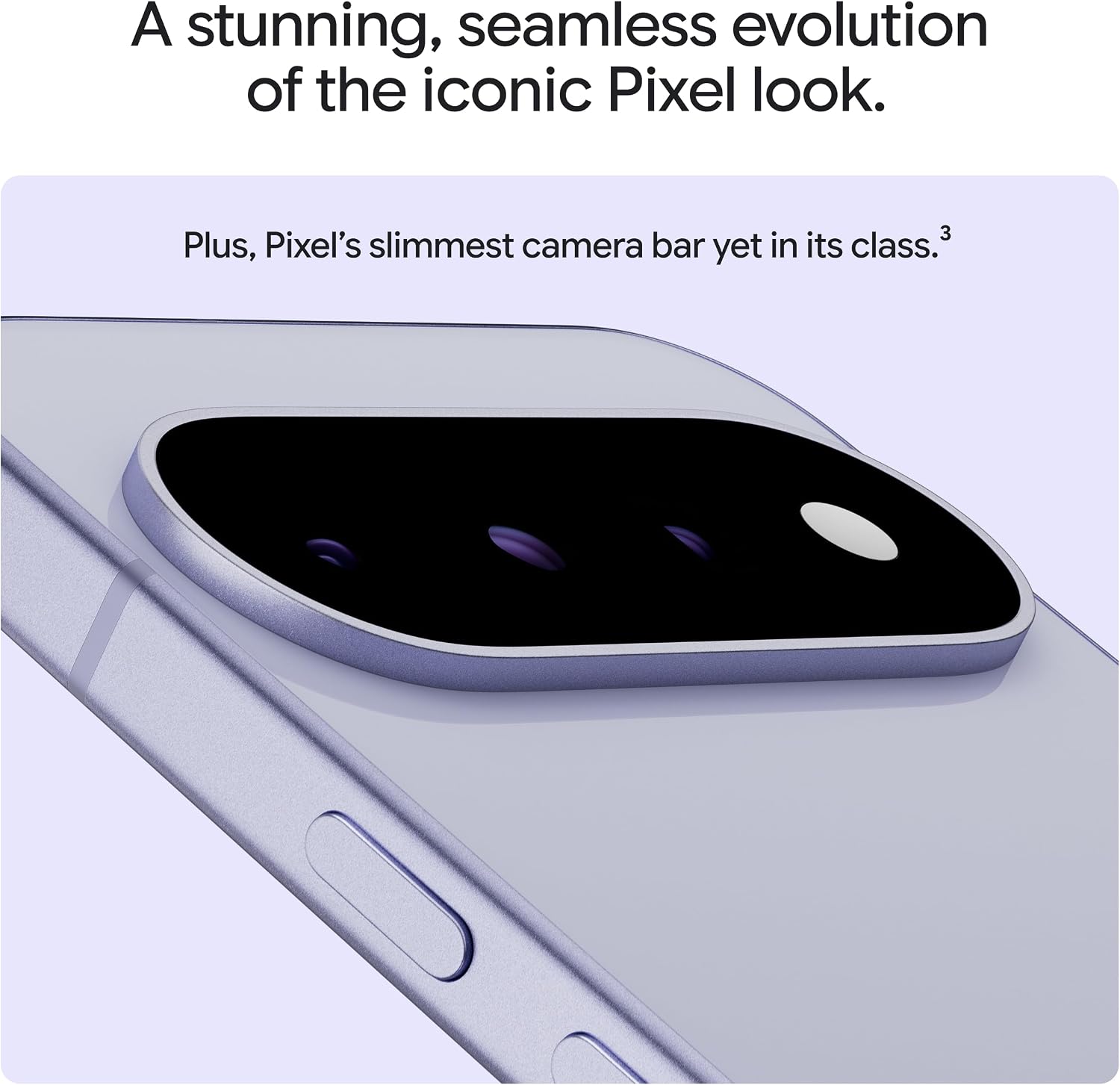
The colorway “Frost” implies a specific design language: likely a matte, cool-toned finish—perhaps a pale blue-white or silvery hue—that sits distinct from the standard “Obsidian” (black) or “Porcelain” (white) options. While the provided text does not detail the material composition (glass vs. metal frame, gloss vs. matte), the name suggests a finish designed to resist fingerprints and glare, a practical benefit for a device handled hundreds of times a day.
Color is a primary differentiator in a market where slab rectangles are visually converging. “Frost” signals a premium, slightly more exclusive SKU—often reserved for higher storage tiers or specific retail channels. It adds a layer of personal expression to the otherwise utilitarian spec sheet. For the buyer choosing this specific listing, the color is a commitment; unlike a case, it cannot be swapped out.
The Unlocked Advantage: Carrier Agnosticism as a Feature
The product description devotes significant space to the unlocked nature of the device: “Unlocked Android phone gives you the flexibility to change carriers and choose your own data plan; it works with Google Fi, Verizon, T-Mobile, AT&T, and other major carriers.”
This is arguably the most technically significant feature listed. A carrier-locked device (often sold at a subsidized upfront cost) binds the user to a specific network for 24–36 months, often requiring expensive postpaid plans to qualify for the “deal.” An unlocked Pixel 11 shatters that dynamic.
Financial Freedom: The buyer can select a Mobile Virtual Network Operator (MVNO) like Mint Mobile, Visible, or Google Fi itself, often securing 15–30GB of premium data for $15–$25/month. Over a two-year ownership cycle, the savings versus a major carrier postpaid plan can exceed $500–$800—effectively paying for the phone itself.
Travel Utility: For international travelers, an unlocked phone is non-negotiable. The ability to land in Tokyo, London, or São Paulo, purchase a local eSIM or physical SIM for $10–$20, and have immediate local data access is a superpower that locked devices (often burdened with $10/day roaming passes) cannot match.
Resale Liquidity: An unlocked device addresses the entire global market of buyers. A Verizon-locked phone only appeals to Verizon customers (or those willing to navigate unlocking policies). The unlocked Pixel 11 appeals to everyone.
Software Purity: Historically, unlocked Pixels receive system updates and security patches directly from Google, often days or weeks before carrier-branded variants which must pass carrier certification labs. The description confirms “Unlocked Android phone,” implying the cleanest possible software experience—no carrier bloatware, no hidden background services logging analytics for the network provider, just the Google vision of Android.
The explicit mention of compatibility with “Google Fi, Verizon, T-Mobile, AT&T, and other major carriers” covers the full spectrum of US network technologies (mmWave 5G, C-band, Sub-6, LTE). This confirms the hardware includes the necessary modem firmware and antenna tuning for the entire North American frequency landscape, a non-trivial engineering feat that ensures the buyer isn’t buying a “Verizon model” that lacks T-Mobile’s band 71, or an “AT&T model” missing Verizon’s mmWave.
The Return Policy: A Contractual Obligation
We must return to the fine print, as it dictates the risk profile of this purchase. The interplay between the gift card and the return window creates a “lock-in” effect.
Standard electronics return windows are typically 14–30 days. If the buyer receives the Pixel 11 on August 15, activates it, realizes the “Frost” color looks different in person, or dislikes the haptics, they face a dilemma. To get a full refund, they must return the phone and the physical/digital gift card. If the gift card was instantly applied to their Amazon account and partially spent on diapers or dog food, they cannot “return” that spent value easily. They would either have to pay the $100 charge or forfeit the return.
This term effectively reduces the “trial period” confidence. The buyer should treat this as a near-final sale unless they are disciplined enough to leave the $100 credit completely untouched in their Amazon balance until the return window closes. “Restocking fee and other charges may apply” adds further friction; a 15% restocking fee on a flagship phone is a $150+ penalty.
Strategic Positioning: Who Is This Bundle For?
Synthesizing the title and description, this specific SKU—Pixel 11, Frost, 512GB, Unlocked, +$100 GC—targets a very specific buyer persona:
- The Ecosystem Investor: Someone already embedded in Google services (Photos, Drive, Fi, Home) who wants the maximum local storage for AI processing and media.
- The Cost Optimizer: A buyer calculating Total Cost of Ownership (TCO). They see the $100 GC + Unlocked freedom (enabling cheap MVNO plans) as a way to beat carrier “free phone with 36-month contract” math.
- The Early Adopter/Reseller: The August 2026 date suggests a launch window purchase. The 512GB/Frost combo is the “halo” configuration. The gift card softens the early-adopter tax.
- The International Traveler: The unlocked multi-band support is the primary feature; the storage is for offline maps/media; the gift card is a nice offset.
The Missing Context: What the Description Doesn’t Say
A review based solely on the provided text must acknowledge the negative space. The description is silent on:
- Display: Size, refresh rate (LTPO?), brightness nits, Gorilla Glass version.
- Processor: Tensor generation, RAM amount (critical for 512GB tier utility).
- Camera Hardware: Sensor sizes, optical zoom range, aperture values.
- Battery/Charging: mAh capacity, wired/wireless speeds, battery life claims.
- Durability: IP rating (likely IP68, but unconfirmed here), frame material.
- Software Support: Years of OS updates / security patches (though 7 years is the current standard).
- Box Contents: Charger? Cable? Case? SIM tool?
The absence of these details in the provided source text means the buyer must consult the official Google Store specifications page or independent technical reviews before committing. This bundle sells the transaction and the configuration, not the device capabilities.
Verdict: A Strong Bundle for the Informed Buyer
The “Google Pixel 11 – Frost – 512 GB with $100 Amazon Gift Card” is a well-structured retail package. It combines the most desirable storage tier, a distinctive aesthetic colorway, the maximum carrier freedom (unlocked, multi-carrier certified), and a tangible financial incentive.
However, the “catch” is entirely in the promotional terms. The gift card is a clawback mechanism disguised as a bonus. The buyer must be organized enough to preserve the gift card value during the return window, and aware that restocking fees loom if the device is opened and rejected.
If the buyer intends to keep the device—and the 512GB/Unlocked combo makes keeping it the rational choice for 4+ years—this is an excellent acquisition strategy. The $100 Amazon credit effectively lowers the cost basis for accessories (Pixel Watch, Buds, cases, chargers) or simply next month’s household essentials. The unlocked nature ensures the device remains a global citizen, free from carrier bloat and financial tethering.
Final Score (Based strictly on Offer Structure & Configuration detailed above): 9/10.
Deducted one point solely for the restrictive return policy clause regarding the gift card, which introduces unnecessary friction for a premium device purchase. Otherwise, the configuration (512GB/Unlocked/Frost) represents the optimal specification mix for the device’s target demographic.