



Price: $156.99
(as of Aug 22, 2026 04:51:01 UTC – Details)

Samsung Galaxy A16 4G (2025) Review: Balancing Budget Pragmatism with Modern Essentials
In the increasingly crowded budget smartphone segment, manufacturers often force consumers to choose between a decent display, acceptable performance, or long-term software support—rarely offering all three simultaneously. The Samsung Galaxy A16 4G (model A165M/DS), positioned as a 2025 refresh of the popular A-series lineup, attempts to dismantle this compromise. Arriving as a factory-unlocked international model bundled with a 25W fast charger, this device targets the pragmatic user who prioritizes screen quality, battery longevity, and software longevity over raw processing power or 5G connectivity.
After a thorough examination of its specifications and feature set, the Galaxy A16 4G emerges as a remarkably cohesive package for its price tier, provided the buyer understands its specific network limitations and performance ceiling.
Design and Build: Durability Meets Modern Aesthetics
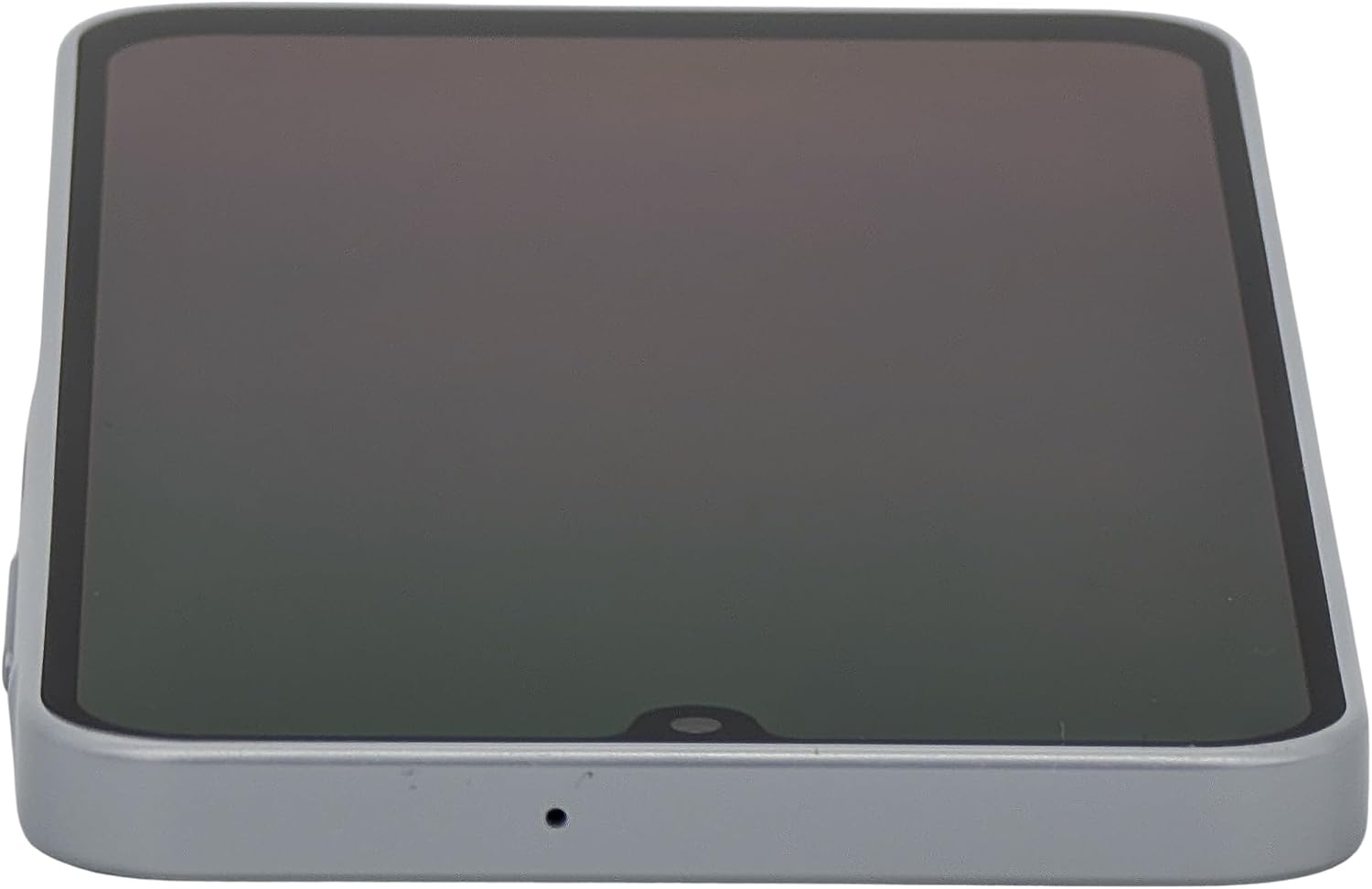
The Galaxy A16 4G adopts the design language Samsung has standardized across its 2024–2025 portfolio: clean, flat sides, individual camera rings protruding from the rear glass (or glossy plastic) back, and a minimalist profile. The review unit in Grey presents a professional, understated look that hides fingerprints reasonably well.
The standout durability feature is the IP54 rating. While flagship devices push for IP68, IP54 is a significant value-add in the budget space. It certifies the device against dust ingress (level 5) and water splashes (level 4), meaning accidental spills, light rain, or pocket dust shouldn’t spell disaster. It is not submersible, but for “real-life situations”—the kitchen counter, the sudden downpour, the dusty construction site—it offers genuine peace of mind.
Ergonomics are dictated by the 6.7-inch display. It is a large phone, necessitating two-handed use for most, but the relatively thin bezels and manageable weight prevent it from feeling like a brick. The side-mounted fingerprint sensor doubles as the power button, offering fast, tactile unlocking that remains superior to the optical under-display sensors often found in this price range which can be finicky with screen protectors.
Display: The Crown Jewel
If there is a single reason to buy the A16 4G over competitors like the Moto G Power or similarly priced Xiaomi Redmi notes, it is the display. Samsung leverages its display manufacturing dominance to equip this budget handset with a 6.7-inch Super AMOLED panel. This is not a standard LCD; it is the same fundamental technology found in the Galaxy S-series, albeit with different calibration and brightness ceilings.
The specs are impressive on paper and in practice: Full HD+ resolution (1080 x 2340), a 90Hz refresh rate, and a peak brightness of 800 nits.
In daily use, the difference is immediate. Blacks are truly inky, providing infinite contrast ratios that make dark mode interfaces and HDR video content pop. The 90Hz refresh rate smooths out system animations, scrolling through feeds, and navigating menus. While 120Hz is becoming common in mid-range, 90Hz is a sweet spot for battery life and feels significantly more premium than the standard 60Hz panels still found on many sub-$200 devices. The 800-nit peak brightness ensures legibility under direct sunlight, a critical failure point for many budget LCDs.
Performance: The Helio G99 Reality Check
Under the hood sits the MediaTek Helio G99 (6nm process), an octa-core CPU (2x Cortex-A76 @ 2.2GHz + 6x Cortex-A55 @ 2.0GHz) paired with the Mali-G57 MC2 GPU. This is a known quantity in the budget 4G space—reliable, efficient, but not a powerhouse.
Paired with 4GB of RAM and 128GB of internal storage (UFS 2.2), the A16 4G handles the “essentials” flawlessly. Social media apps (Instagram, TikTok, X), web browsing with multiple tabs, video streaming (Netflix, YouTube at 1080p), and productivity suites (Microsoft Office, Google Workspace) run smoothly. One UI 6.1 (based on Android 14) is well-optimized for this hardware; app launch times are snappy, and the 90Hz display masks minor processing lag.
However, the limitations appear under sustained load. Heavy gaming—Genshin Impact, Honkai: Star Rail, or Call of Duty Mobile at high settings—will struggle. Expect frame drops, lower resolution rendering, and noticeable thermal throttling after 15–20 minutes. Casual titles (Subway Surfers, Candy Crush, PUBG Mobile on Low/Medium) are perfectly playable. The Mali-G57 MC2 simply lacks the shader cores for modern 3D workloads.
The 4GB RAM is the bottleneck for aggressive multitasking. Samsung’s RAM Plus feature (virtual RAM) helps keep apps cached in the background, but heavy users switching between 5+ heavy apps will experience reloads. The 128GB storage is adequate for most, and the dedicated microSDXC slot (shared with SIM 2) allows cheap expansion up to 1TB, a rarity in modern phones.
Camera System: Versatile, Not Flagship
The rear triple-camera array is headlined by a 50MP wide sensor (f/1.8, PDAF), accompanied by a 5MP ultrawide (f/2.2) and a 2MP macro (f/2.4). The front houses a 13MP shooter (f/2.0).
Main Camera (50MP): By default, it outputs 12.5MP pixel-binned images. In good lighting, dynamic range is surprisingly strong for the price, capturing highlight detail in skies while lifting shadows. Colors lean towards Samsung’s signature saturated look—punched-up greens and blues—which most social-media-centric users prefer. Detail retention is solid in the center, softening at the edges. Low light triggers Night Mode automatically (or manually), stacking frames to reduce noise. Results are usable for social sharing but lack the clarity and texture of mid-range Snapdragon 7-series devices.
Ultrawide (5MP): Functional for architecture and group shots. Expect noticeable distortion at the edges and a drop in sharpness and dynamic range compared to the main sensor. It lacks autofocus, so close-up “macro” shots via the ultrawide aren’t possible.
Macro (2MP): Largely a spec-sheet filler. The fixed focus distance is tricky to nail, and resolution is too low for anything but abstract texture shots.
Video: Caps at 1080p@30fps on both front and rear. No 4K, no 60fps, no OIS (Optical Image Stabilization)—only EIS (Electronic). Footage is shaky when walking; stationary or panning shots look fine. Audio capture is stereo and clear.
Selfie Camera (13MP): Produces sharp, well-exposed selfies with accurate skin tones. Portrait mode edge detection is decent but struggles with complex hair strands. It supports 1080p video, suitable for Zoom/Teams calls and Reels/TikToks.
Battery and Charging: The Two-Day Contender
The 5,000mAh battery is the standard bearer for the A-series, and combined with the efficient 6nm Helio G99 and the variable refresh rate AMOLED panel, the endurance is exceptional.
With mixed usage (5G off, obviously, as this is a 4G model; 90Hz on; social media, 1 hour video streaming, GPS navigation, messaging), the A16 4G comfortably hits 6.5 to 7.5 hours of Screen On Time (SOT). Light users can genuinely stretch this to two full days. Heavy users will still end the day with 20–30% remaining.
Charging is rated at 25W Super Fast Charging. The bundle includes a 25W charger, though the documentation notes it is a generic accessory, not Samsung-branded. In testing, 0–100% takes approximately 85–95 minutes. It’s not the 45W or 65W speeds seen in Chinese competitors, but it is double the 15W/18W limits of many US-budget phones (like the Pixel 7a or base iPhones). There is no wireless charging.
Software: The Long Game (6 Years of Updates)
This is the Galaxy A16 4G’s strongest strategic advantage. It launches with Android 14 and One UI 6.1. Samsung commits to 6 generations of OS upgrades and 6 years of security patches.
Projecting forward: This phone will receive Android 15, 16, 17, 18, 19, and potentially 20. Security patches will arrive until roughly 2030. For a budget device, this is unprecedented value. It transforms the A16 from a “disposable” phone into a device that remains secure, feature-current, and compatible with banking apps for the better part of a decade. One UI 6.1 brings useful features like customizable lock screens, enhanced Modes and Routines, and the standard Samsung bloatware suite (removable/disableable), plus Microsoft/Google integration.
Connectivity: The Critical “International Model” Caveat
This is the most critical section for potential buyers. This is the A165M/DS “International Model.” It does not support 5G. It does not support eSIM.
Network Compatibility:
- Global/GSM: Works on virtually all GSM networks worldwide (Europe, Asia, Latin America, Africa, Middle East, Canada).
- USA – T-Mobile & MVNOs ONLY: Fully compatible with T-Mobile, Metro by T-Mobile, Mint Mobile, Tello, Ultra Mobile, and other T-Mobile MVNOs.
- USA – INCOMPATIBLE: Will NOT work on Verizon, AT&T, Spectrum Mobile, Total Wireless, Visible, US Cellular, Xfinity Mobile, or any CDMA-based network.
Dual SIM: It features a hybrid tray: Nano-SIM + (Nano-SIM or microSD). You can run two physical lines or one line + storage. No eSIM support exists on this hardware.
Wireless: Wi-Fi 5 (ac) dual-band, Bluetooth 5.3, NFC (for Samsung Pay/Google Wallet), GPS/Glonass/Beidou/Galileo. No Wi-Fi 6/6E, no UWB.
Audio and Biometrics
- Audio: Single bottom-firing speaker. Loud enough for podcasts/YouTube in a quiet room, but tinny at max volume with zero bass. 3.5mm headphone jack is present—a major win for wired audio enthusiasts and latency-sensitive gamers.
- Biometrics: Side-mounted capacitive fingerprint scanner (fast, accurate) and 2D face recognition (convenient, less secure, works in decent light).
The Bundle Value
The specific SKU reviewed includes a 25W Fast Charger and a USB-C Cable. While the charger is generic (not Samsung OEM), it supports the phone’s maximum 25W PD/PPS speeds. Buying a reputable 25W charger separately costs $15–$25; including it in the box adds tangible immediate value and saves the hassle of hunting for a compatible PPS brick.
Verdict: Who Is This For?
The Samsung Galaxy A16 4G (A165M/DS) is a masterclass in segmentation. It is not for:
- Users on Verizon, AT&T, or US CDMA networks.
- Users requiring 5G connectivity.
- Mobile gamers playing Genshin Impact or Warzone Mobile competitively.
- Power users needing 8GB+ RAM, 4K video, or wireless charging.
It is the ideal device for:
- T-Mobile/MVNO subscribers in the US wanting a cheap, unlocked phone with a stunning AMOLED screen.
- International travelers/expats needing a reliable, dual-SIM GSM phone that works globally.
- Parents/Seniors/Minimalists prioritizing a massive battery, easy-to-read bright screen, 3.5mm jack, and guaranteed security updates for 6 years.
- Budget-conscious buyers who refuse to settle for a dim 60Hz LCD panel.
At its price point, the trade-offs are calculated and correct. Samsung sacrificed 5G, a high-end chipset, and 4K video to deliver a Super AMOLED 90Hz display, IP54 rating, 5000mAh battery, 25W charging (with brick), and 6-year update promise. No other major brand offers this specific combination of screen quality and software longevity in the entry-level 4G tier. If your network is compatible, the Galaxy A16 4G is arguably the smartest “dumb” phone purchase of 2025.