





Price: $99.00
(as of Aug 22, 2026 07:32:15 UTC – Details)

Google Fitbit Air Performance Loop Band (Obsidian): A Deep Dive into Screenless Wellness
In a wearable market increasingly dominated by sprawling smartwatches that function as wrist-borne smartphones, the Google Fitbit Air Performance Loop Band in Obsidian represents a distinct philosophical pivot. It is a device defined not by what it adds to your wrist, but by what it removes. By stripping away the display, the bulky chassis, and the constant demand for visual attention, Google has engineered a tracker that aims to be the antithesis of distraction—a “invisible” health companion designed to vanish into the rhythm of daily life. Based on the official product specifications and design brief, this review explores how the Fitbit Air attempts to redefine the relationship between user and data through radical comfort, AI-driven intelligence, and a unique modular form factor.
The Philosophy of Invisibility: Design and Wearability
The central thesis of the Fitbit Air is encapsulated in its name: Air. The product description explicitly targets the “unbelievably comfortable” benchmark, utilizing a “lightweight, micro-adjustable fit” intended to sit “quietly and securely” through the triad of modern existence: work, workouts, and sleep.
The hardware itself is a “One Size Tracker” accommodating wrist circumferences between 130mm and 210mm. This wide range is critical; it suggests the proprietary “Performance Loop Band” mechanism relies on a high-friction, infinitely adjustable weave or clasp system rather than traditional peg-and-hole notches. The description notes the band sits “comfortably and quietly,” addressing the common pain points of nocturnal wear—catching on sheets, pinching skin, or creating pressure points that corrupt sleep data by forcing the user to remove the device.
The aesthetic choice of “Obsidian” reinforces the “invisible” mandate. A deep, matte black finish allows the tracker to recede visually. It avoids the “sport watch” look that clashes with business attire or evening wear. The description highlights a key design innovation: “With no screen to distract you or disrupt your style, your tracker moves seamlessly from bracelet to workout band to sleep band.” This lack of a display is the single most defining hardware feature. It eliminates the gesture of wrist-raising to check the time, notifications, or heart rate. It forces a behavioral shift: the tracker becomes a passive collector, not an active destination.
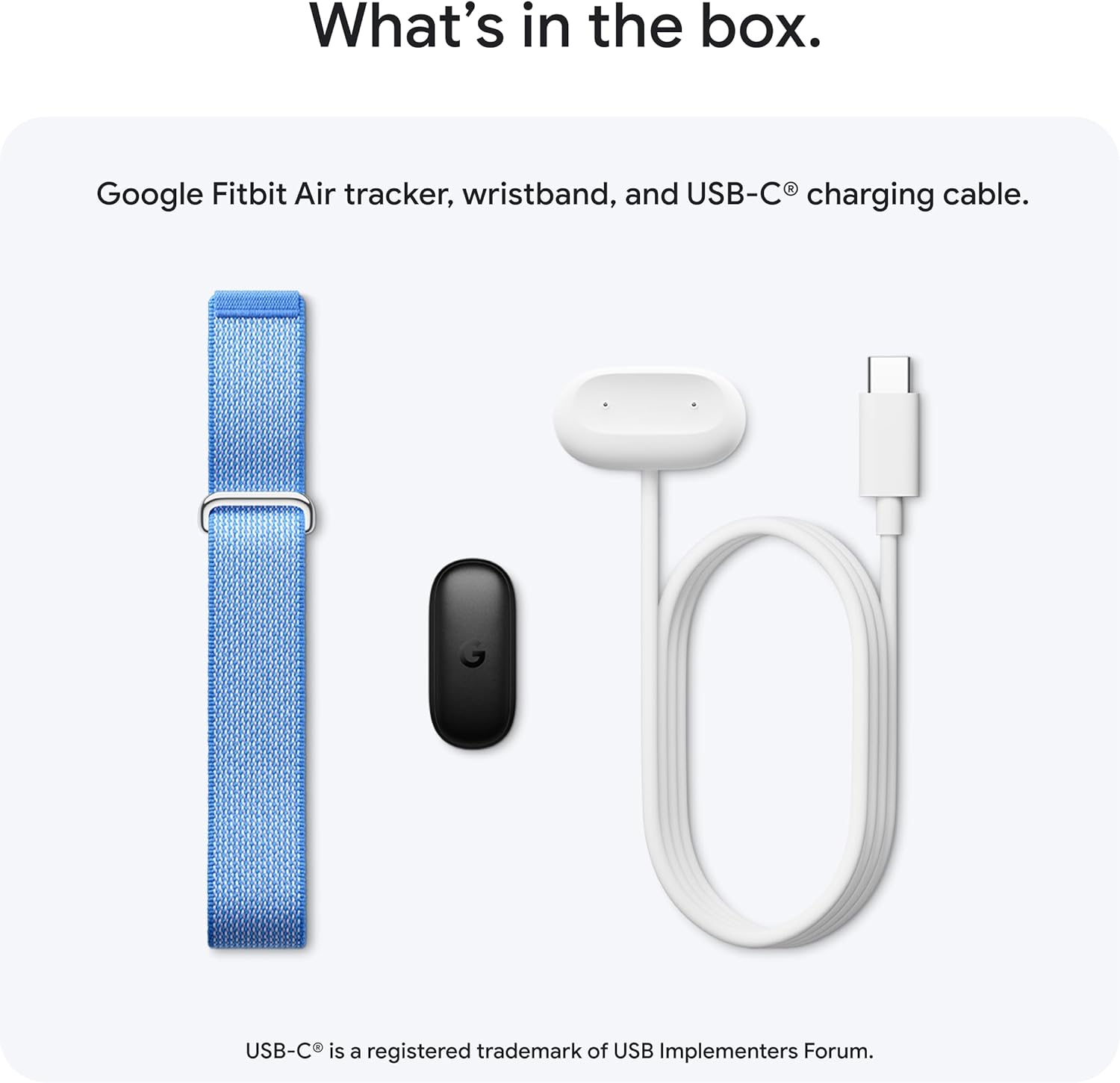
Furthermore, the modular “pebble” architecture—”just press the pebble in, click, and go”—suggests a core sensor module that detaches from the Performance Loop for charging or potentially swapping into other form factors (though the provided description focuses on the Loop band). This “pebble” design language implies a dense, rounded sensor housing that distributes weight evenly, avoiding the top-heavy sag common in traditional watch-style trackers.
The Sensor Suite: Precision Without a Viewfinder
Removing the screen places immense pressure on the underlying sensor technology. If the user cannot glance at a real-time heart rate or SpO2 reading, the background sampling must be unimpeachable. The product description addresses this directly: “advanced sensors and new algorithms power more accurate, precise health tracking, 24/7.”
While specific sensor types (optical heart rate, accelerometer, gyroscope, skin temperature, SpO2) are not itemized in the source text, the claim of “new algorithms” suggests a generational leap in signal processing. For a screenless device, algorithmic filtering of motion artifacts is paramount. During “workouts” (high motion) and “sleep” (low motion, high variability), the raw photoplethysmography (PPG) signal is noisy. The promise of “precise health tracking” implies Google has leveraged its vast machine learning infrastructure to clean these signals in the background, delivering reliable resting heart rate trends, heart rate variability (HRV), and sleep staging without user intervention.
The “24/7” qualifier is supported by the form factor. Because the device is comfortable enough to never take off, the data continuity is theoretically perfect. Gaps in data—usually caused by charging or discomfort—are the enemy of longitudinal health insights. The Fitbit Air aims to solve the comfort gap; the battery life (discussed below) solves the charging gap.
Google Health and the Gemini Era: Coaching Over Counting
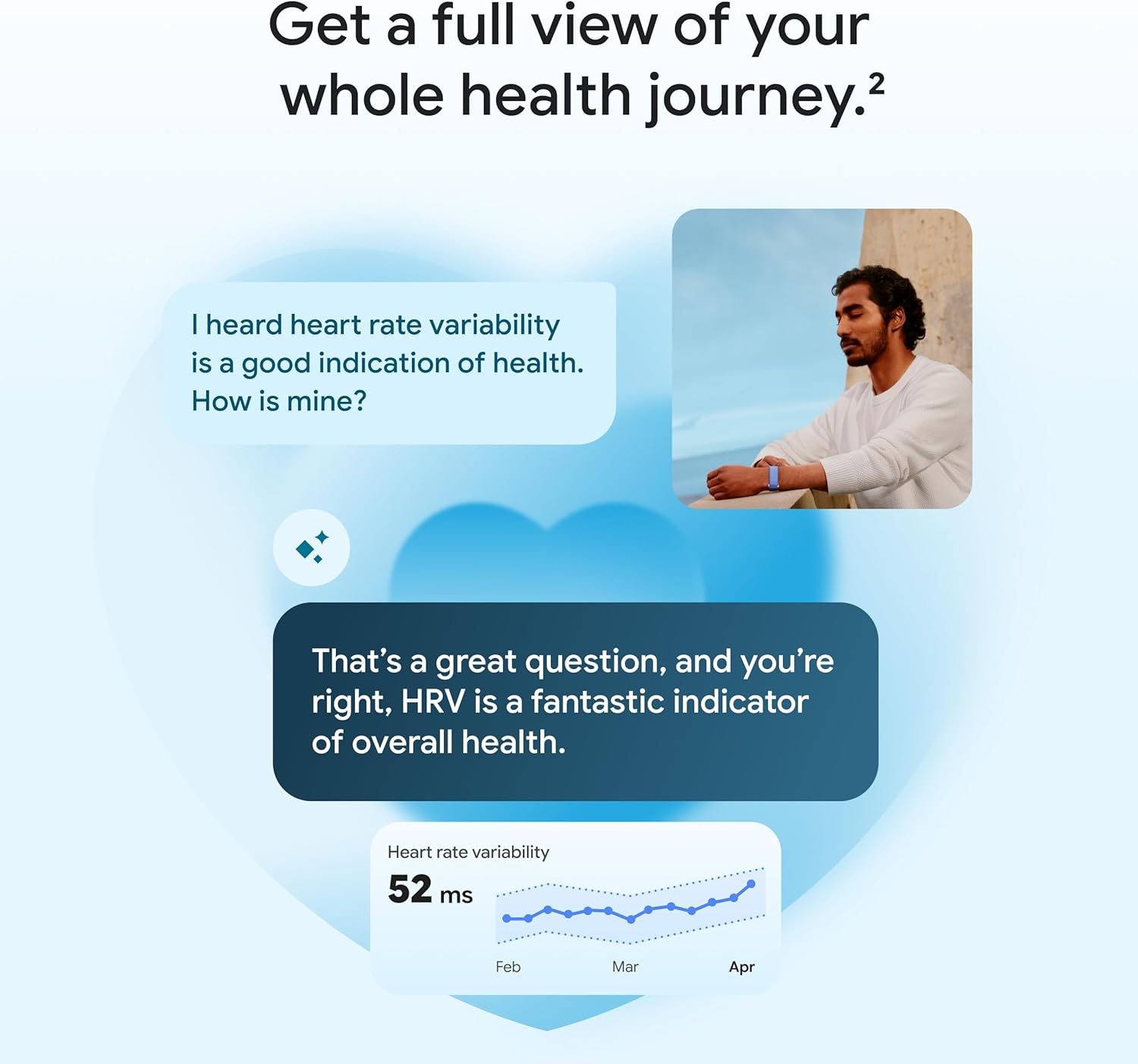
Hardware is merely the vessel for the software experience. The Fitbit Air is the physical manifestation of the “Google Health” platform, described as bringing together “effortless tracking and adaptive coaching to help make the most of your everyday.”
The integration of Gemini, Google’s flagship multimodal AI model, marks a significant evolution from rule-based insights (“You walked 10,000 steps”) to generative, contextual coaching (“Based on your poor sleep and high resting heart rate, here is a modified workout and a breathing exercise for this afternoon”). The description specifies “personalized coaching that’s built with Gemini and adapts to your life.”
This distinction—adaptive coaching—is crucial. Traditional trackers offer static goals. An AI-driven coach can synthesize disparate data streams: sleep debt, exertion load, menstrual cycle phases (if logged), and subjective readiness to dynamically adjust daily targets. For a screenless device, this coaching must be delivered via the paired smartphone app (pixel watch app / Fitbit app). The user experience shifts from “checking the wrist” to “receiving a notification or opening the app for the daily briefing.” This aligns perfectly with the “no screen to distract you” hardware philosophy. The intelligence lives in the cloud and the phone; the wrist is merely the sensor.
The description notes a “3-month trial at no cost to you” for Google Health Premium, with the subscription sold separately. This freemium model gates the highest-tier AI insights. The base device likely provides standard metrics (steps, sleep duration, basic heart rate zones), while the Premium tier unlocks the “Gemini-built” adaptive coaching, deeper sleep profiles, wellness reports, and perhaps the “personalized coaching” mentioned. The value proposition of the hardware, therefore, is inextricably linked to the ongoing software subscription cost.
Power Management: The Week-Long Promise
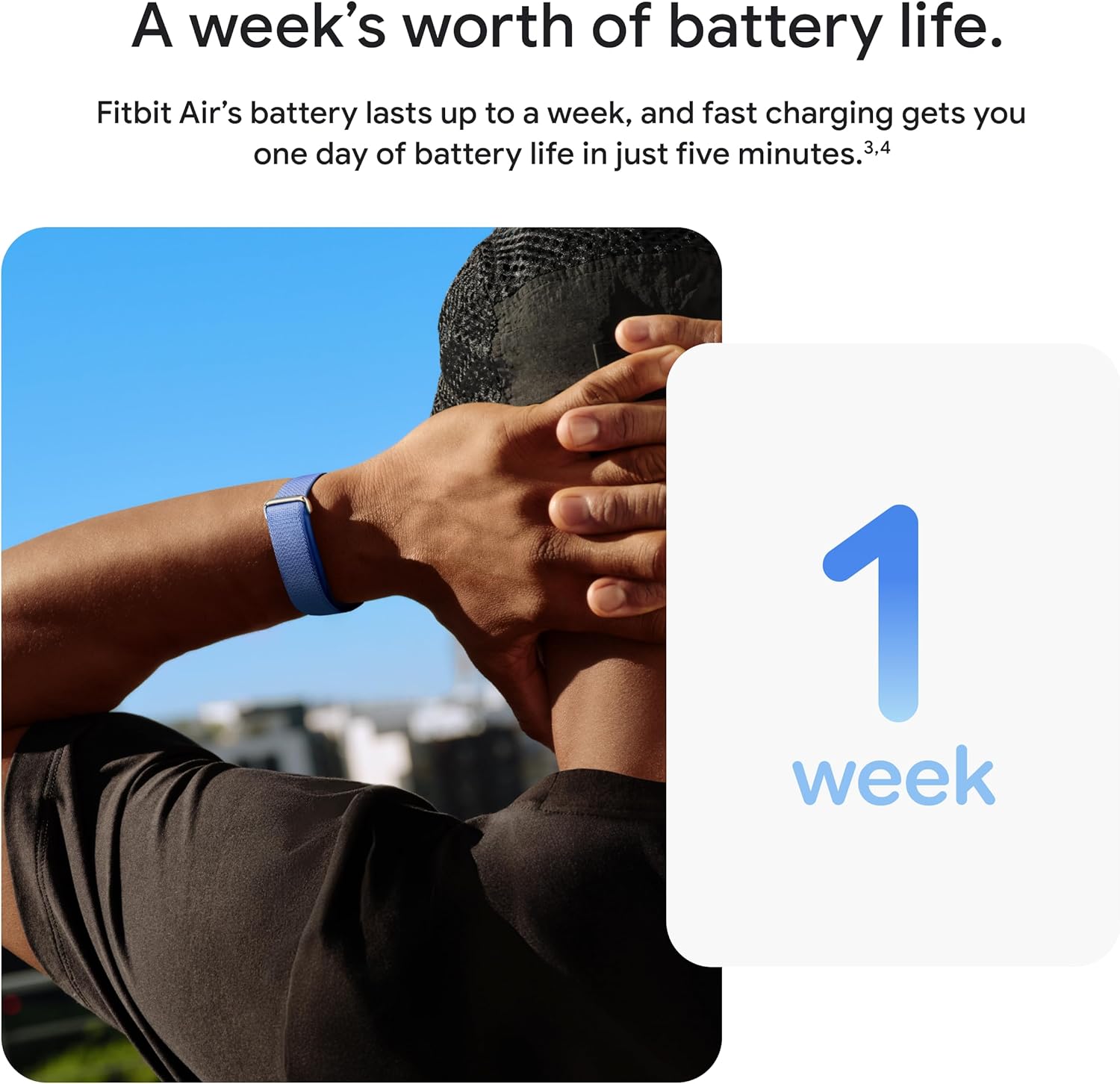
Battery anxiety is the primary friction point for wearables. The Fitbit Air claims “up to a week’s worth of battery,” a figure that places it at the upper echelon of current trackers (surpassing the typical 1-2 days of Wear OS watches or Apple Watch, and matching the best of Whoop or Oura).
This longevity is a direct dividend of the screenless architecture. The display is the single largest power draw on any wearable. By removing it, and likely utilizing a low-power Bluetooth LE (Low Energy) radio for sporadic syncs rather than a constant connection for notifications, the “pebble” can house a battery optimized for density over discharge rate.
The charging specification is equally impressive: “fast charging gets you one day of battery life in just five minutes.” This suggests a high charge acceptance rate (likely 2C or higher) and a small total battery capacity (perhaps 150-200mAh). A 5-minute charge for 24 hours of operation changes the charging paradigm from “overnight ritual” to “brush your teeth top-up.” It effectively eliminates the “dead watch” scenario. If the battery dies, a user can strap it on, charge it during a morning routine, and have full functionality for the day. Combined with the 7-day ceiling, the Fitbit Air effectively renders battery management a non-issue for the vast majority of users.
The “Performance Loop” Ecosystem: Style as a Feature
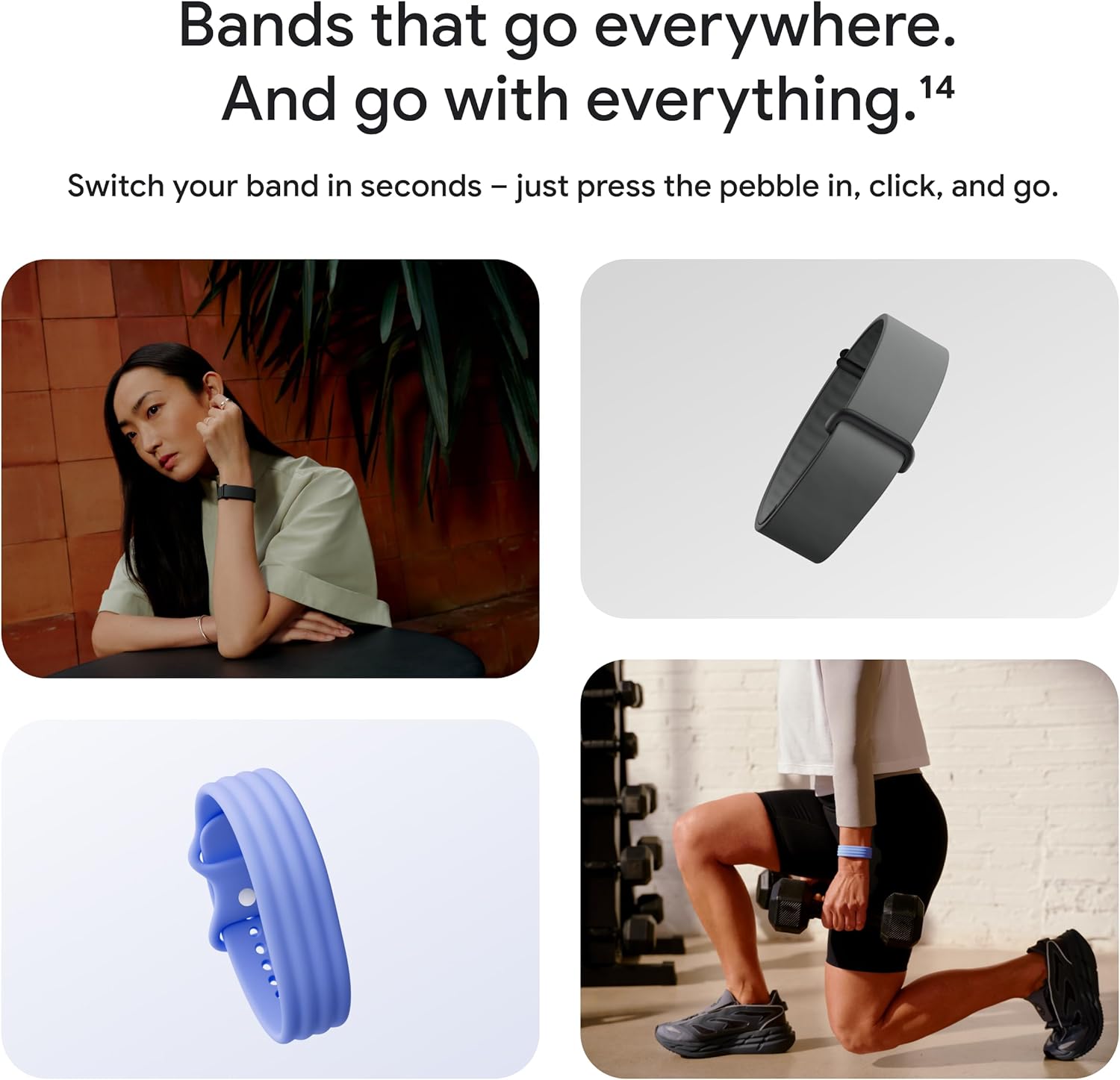
The product title specifies the “Performance Loop Band,” and the description emphasizes style versatility: “your tracker moves seamlessly from bracelet to workout band to sleep band, and you can change looks in seconds.”
The term “Performance Loop” implies a specific material science—likely a breathable, moisture-wicking knit or fluoroelastomer blend designed for high-sweat scenarios, distinct from a “Classic” leather or metal link band. The “Obsidian” colorway on a loop band suggests a tactical, matte finish that hides sweat stains and wear.
The “click and go” mechanism for the pebble module is the linchpin of this versatility. It implies a secure, audible locking mechanism (likely magnetic alignment + mechanical retention) that survives high-G activities (sprinting, burpees, swimming) but releases instantly for charging or band swapping. This modularity future-proofs the hardware investment; as Google releases new band materials (metal, fabric, nylon), the core sensor “pebble” remains current.
Critical Analysis: The Trade-offs of a Screenless Existence
Based solely on the provided specifications, the Fitbit Air makes distinct trade-offs that potential buyers must weigh.
The Gains:
- True 24/7 Compliance: The combination of micro-adjustable fit, negligible weight, week-long battery, and 5-minute charge removes almost every physical barrier to continuous wear.
- Mental Declutter: No screen means no notification buzzing, no “rings to close” anxiety on the wrist, no blue light at night. It is a digital minimalist’s dream.
- Data Integrity: Continuous wear + advanced algorithms = superior longitudinal baselines (resting HR, HRV, skin temp trends).
- AI Leverage: Gemini integration promises a shift from data presentation to actionable synthesis, which is the holy grail of consumer health tech.
The Concessions:
- No Real-Time Feedback: During a run or HIIT class, you cannot glance at pace, zone, or heart rate. You run blind, relying on phone audio cues (if phone is carried) or post-workout analysis. This is a dealbreaker for serious athletes who train by metrics.
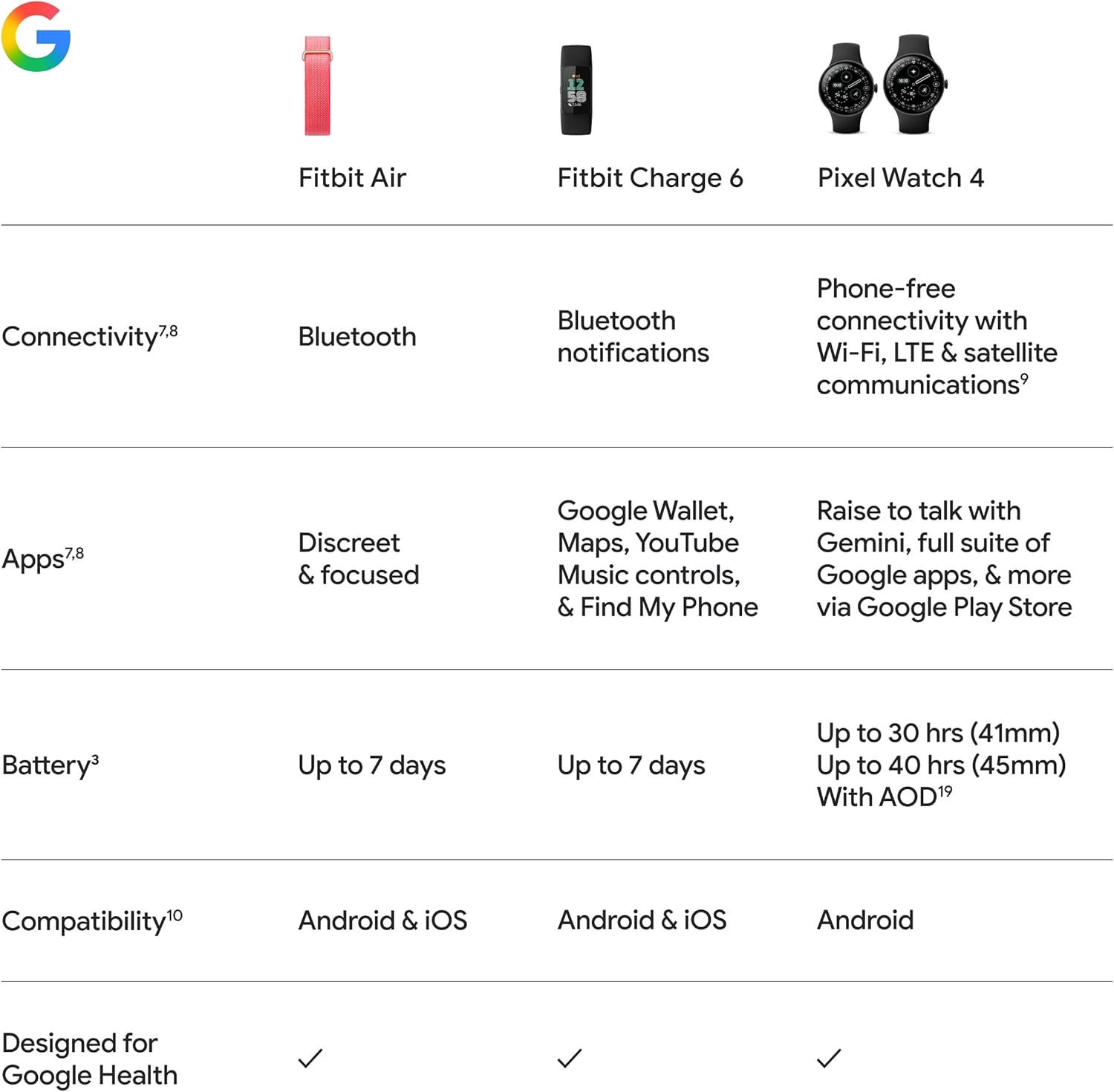
- No Smartwatch Utilities: No NFC payments, no music controls, no notification reading, no voice assistant trigger on wrist. It is a tracker, not a watch.
- Subscription Dependency: The headline feature—Gemini coaching—is locked behind Google Health Premium. The hardware’s long-term value proposition degrades significantly without the recurring subscription.
- Phone Dependency: Since there is no screen, the smartphone is the only interface. If the phone dies, is lost, or is left at home, the data is inaccessible until sync.
Positioning: Who Is This For?
The Google Fitbit Air Performance Loop in Obsidian is not a Fitbit Charge 6 competitor; it is a direct rival to the Whoop 4.0 and Oura Ring Gen 3. It occupies the “Screenless Serious Tracker” niche.
- Vs. Whoop: Whoop uses a knit band and charges via a battery pack slider (charge while wearing). Fitbit Air uses a “click-in” pebble requiring removal for charging (albeit very fast). Whoop has no screen and no free tier (subscription mandatory). Fitbit Air likely offers a functional free tier (basic stats) with Premium for AI. The “Obsidian Loop” aesthetic is more jewelry-adjacent than Whoop’s technical textile look.
- Vs. Oura Ring: Oura wins on absolute invisibility (finger vs wrist) and sleep comfort. Fitbit Air wins on workout ergonomics (wrist HR is generally more reliable for high-intensity interval training than finger PPG) and the ability to swap bands/styles. The 5-minute charge is vastly superior to Oura’s 20-80 minute dock charge.
Conclusion: The Discipline of Passive Tracking
The Google Fitbit Air Performance Loop Band in Obsidian is a bold bet on the maturity of the health-conscious consumer. It posits that we no longer need a dashboard on our wrist to validate our effort; we need a silent partner that watches, learns, and speaks only when spoken to—via the sage voice of Gemini on our phones.
Its success hinges on the execution of the “micro-adjustable fit” (does it truly fit 130mm and 210mm wrists equally well without slippage?), the accuracy of the “new algorithms” without the calibration of a screen, and the genuine utility of the Gemini coaching versus standard algorithmic insights.
If the hardware delivers on the “invisible” promise—if the Obsidian pebble truly disappears beneath a shirt cuff, survives a marathon and a sauna on the same band, and charges in the time it takes to make coffee—then the Fitbit Air represents the purest execution of the “Quantified Self” ideal yet: maximum data, minimum friction. It transforms the tracker from a gadget you wear into a layer of skin you have. For the user seeking to silence the noise while amplifying the signal, the Obsidian Air is a compelling, sophisticated proposition.