



Price: $279.00
(as of Aug 22, 2026 14:16:51 UTC – Details)

MIOPS Smart+ (Model MIOPS-SM-N1): A Comprehensive Review of the Ultimate High-Speed Photography & Timelapse Trigger
In the evolving landscape of modern photography, the barrier between creative vision and technical execution is often defined by the tools at a photographer’s disposal. Capturing the fleeting milliseconds of a lightning strike, the chaotic beauty of a popping balloon, or the serene passage of time across a landscape requires precision that exceeds human reaction speeds. Enter the MIOPS Smart+ Smartphone Controllable Camera and Flash Trigger—specifically the MIOPS-SM-N1 variant designed for Nikon’s professional and prosumer lineup. This device promises to transform a standard camera into a high-speed capture instrument, blending sophisticated sensor technology with intuitive smartphone integration. This review explores the capabilities, design, and practical applications of this versatile trigger based on its manufacturer specifications and feature set.
Design and Build: Compact Engineering
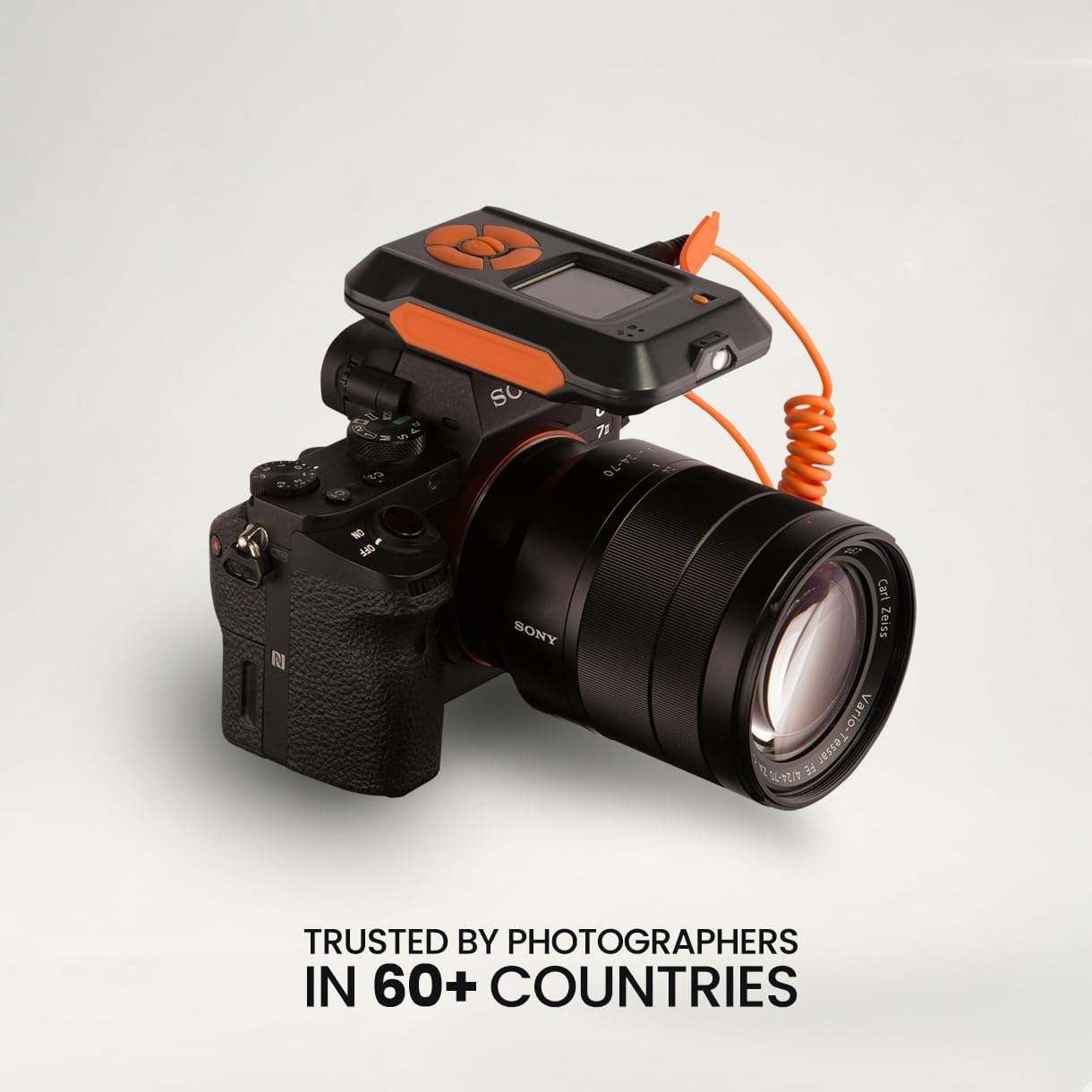
The first impression of the MIOPS Smart+ is its remarkably compact form factor. The product literature emphasizes that this “versatile camera and flash trigger” is packed into “one small device.” This portability is a critical asset for photographers who operate in the field—whether chasing storms across plains or setting up macro studios in limited spaces. Unlike bulky, dedicated intervalometers or sound triggers of the past, the Smart+ consolidates multiple distinct functions into a single unit that sits unobtrusively on the camera’s hot shoe or mounts nearby via a tripod thread.
The build quality appears tailored for field use. The device features a clear, readable display and physical controls for standalone operation, though the primary interface philosophy leans heavily toward wireless connectivity. The inclusion of a dedicated camera connection cable (specific to the SM-N1 model) ensures a secure, wired link to the camera’s remote port, eliminating the unreliability of infrared triggers.
Connectivity: The Smartphone as Command Center
The defining characteristic of the “Smart+” iteration is its Bluetooth Low Energy (BLE) support, enabling full control via the dedicated MIOPS mobile application (compatible with both iOS and Android). This architectural decision shifts the complexity of configuration from a cramped on-device menu system to the expansive, high-resolution touchscreen of a smartphone.
The app acts as a comprehensive dashboard. Within Bluetooth range, users can configure triggering parameters, monitor sensor readings in real-time (such as sound levels or light intensity), and initiate sequences without touching the camera—vital for preventing vibration during long exposures or macro work. The energy efficiency of BLE ensures that both the trigger and the phone battery endure extended shooting sessions, a crucial factor for timelapse projects spanning hours or days.
Furthermore, the manufacturer highlights consistent firmware updates delivered via compressed files for Windows and Mac. This commitment to software longevity suggests the hardware platform is designed to evolve, potentially adding new modes or refining sensor algorithms over the product’s lifecycle.
Core Triggering Modes: Deconstructing the “Multiple Modes”
The MIOPS Smart+ distinguishes itself through a suite of distinct triggering modes, each engineered for specific high-speed or automated scenarios.
1. Lightning Mode: Chasing the Storm
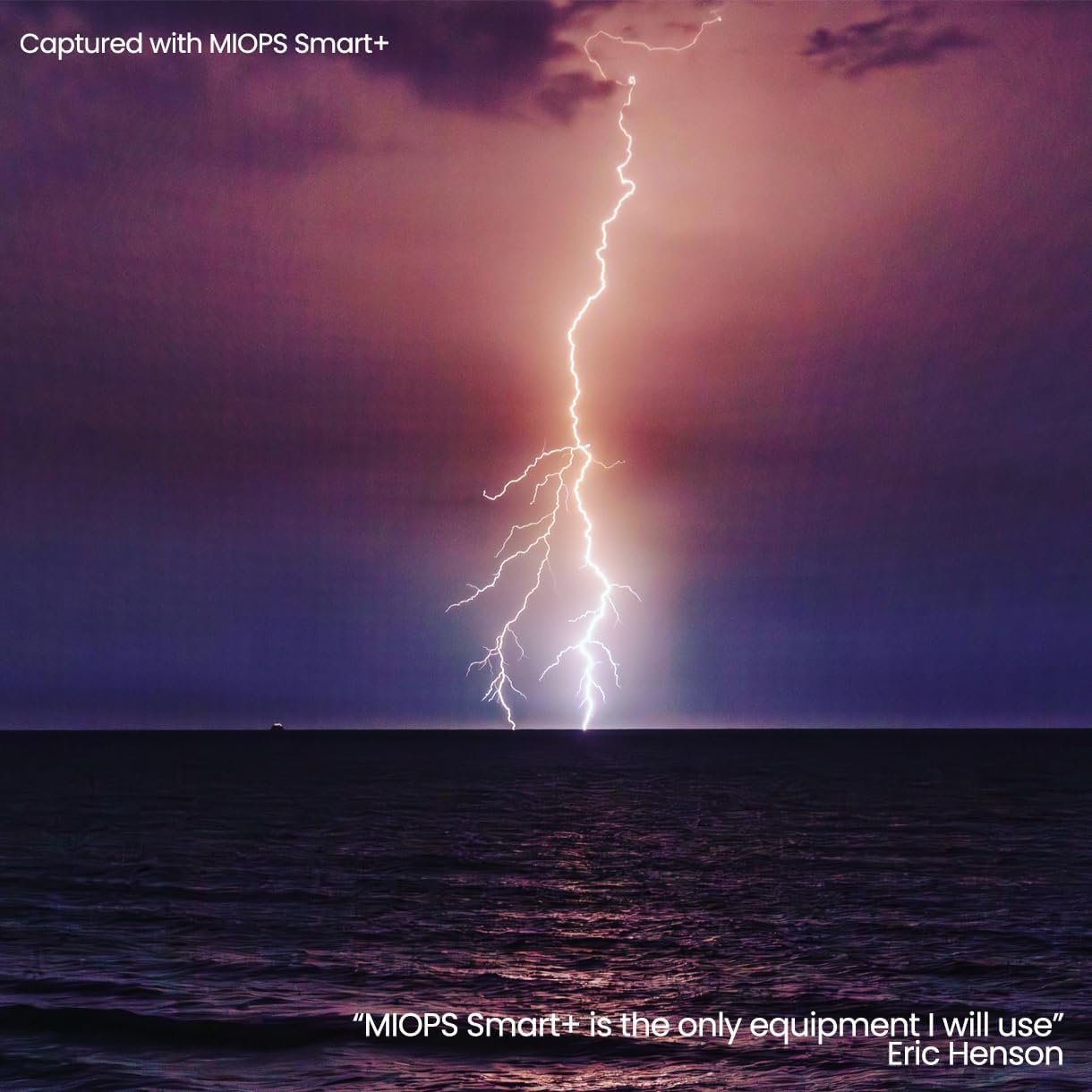
The Lightning mode utilizes a highly sensitive light sensor designed to detect the rapid intensity spike of a lightning strike—day or night—and trigger the camera or flash “instantly.” The specification notes the sensor detects lightning and triggers the shutter with minimal latency.
- Practical Implication: This removes the guesswork and wasted shutter actuations of continuous shooting modes. The sensor’s ability to function in daylight implies sophisticated filtering to distinguish lightning from ambient light changes (like passing clouds). For storm photographers, this allows the camera to sleep until the exact millisecond a strike occurs, saving buffer space and shutter life.
2. Sound Mode: Freezing the Invisible
Sound triggering opens the door to “events that you wouldn’t be able to normally” capture—breaking glass, popping balloons, or snapping pencils. The Smart+ features an onboard microphone with adjustable sensitivity and delay settings (configured via the app).
- Technical Nuance: The utility here lies in the delay parameter. Since sound travels relatively slowly (~343 m/s), the ability to dial in a precise millisecond delay between the sound detection and the shutter/flash firing is what separates a photo of an intact balloon from one capturing the exact moment of rupture. The app interface allows for rapid iteration of this delay value.
3. Laser Mode: The Precision Gate
Perhaps the most “laboratory-grade” feature is the Laser mode. By aligning an external laser pointer (not included) with the trigger’s receiver, the Smart+ creates an invisible tripwire. Breaking the beam triggers the capture.
- Applications: This is the gold standard for water droplet collision photography, capturing high-speed projectiles (airsoft pellets, arrows), or documenting fast-moving wildlife crossing a specific plane. The spec sheet explicitly mentions freezing “water droplets, fast wild animals, or even falling objects.” The response time of the laser sensor is typically in the microsecond range, far exceeding the latency of sound or light sensors, making it suitable for subjects moving at hundreds of feet per second.
4. Timelapse Mode: Programmable Long-Term Automation
The Timelapse mode is not a simple intervalometer. It allows users to specify:
- Interval Time: Ranging from 1 second to 1 hour.
- Frame Count: Defining exactly how many photos will be taken.
- Duration: Programming sequences for “days or even months.”
This granularity supports everything from fast cloud movement (1-3s intervals) to construction site progress (15-30 min intervals) or seasonal changes (daily intervals). The “days or months” claim implies robust power management—the device likely enters deep sleep between intervals, drawing negligible current, allowing it to run on its internal battery for extended periods, especially when the camera is powered separately.
5. HDR and Additional Modes
The description lists “HDR” among the advanced modes. While details are sparse in the provided text, an integrated HDR mode typically automates bracketing sequences (varying shutter speeds) and can combine them with the timelapse function for “Holy Grail” day-to-night transitions, managing exposure ramping automatically.
The MIOPS-SM-N1 Specifics: Nikon Compatibility Deep Dive
A critical purchasing factor for this specific SKU (MIOPS-SM-N1) is the proprietary connection cable. Camera manufacturers utilize different remote port pinouts and communication protocols. The SM-N1 cable is engineered specifically for Nikon’s 10-pin terminal (found on pro bodies) and specific accessory terminals on other models.
The provided compatibility list is extensive, covering decades of Nikon technology:
- Professional/Flagship (10-pin): D1, D2, D3, D4, D5, D6 series; D800, D810, D850; D300, D500, D700; F5, F6, F100, F90 (film bodies).
- Mirrorless (Z-mount): Z8, Z9, Z5, Z6, Z7 (Note: Z8/Z9 use a different connector type—USB-C/Type-C for remote control—than the 10-pin. The inclusion of these models on the SM-N1 list suggests the cable provided may be a USB-C variant, or the list encompasses the trigger’s compatibility via different cables. Buyers of Z8/Z9 should verify the exact cable connector type included in the SM-N1 box, as they typically require a USB-C to USB-C or USB-C to Micro cable, distinct from the 10-pin cable for DSLRs).
- Prosumer/Enthusiast: D7000, D7100, D7200, D7500, D780; D600, D610, D750.
Buyer Advisory: The model number suffix (-N1) is decisive. If a user owns a Nikon D3200, D5600, or Z50 (which use the smaller rectangular accessory terminal), they require the MIOPS-SM-N3 model. The SM-N1 cable will not fit these cameras. This segmentation ensures the physical connection is robust and maintains the camera’s weather sealing where applicable.
Workflow Integration: Standalone vs. App Control
A significant strength of the Smart+ architecture is its dual-operating capability.
- App-Dependent Setup: Complex scenarios (e.g., “Start timelapse at sunset, switch to lightning detection at 9 PM, ramp exposure”) are configured rapidly on the phone.
- Standalone Execution: Once a scenario is loaded, the trigger operates independently. The phone can be pocketed, turned off, or taken out of Bluetooth range. The Smart+ executes the logic onboard. This reliability is paramount; a Bluetooth disconnection mid-timelapse or during a lightning storm will not interrupt the capture sequence.
Power Management and Field Readiness
The unit is described as “energy efficient.” It utilizes an internal rechargeable battery (typically charged via Micro-USB or USB-C depending on hardware revision). For timelapse sessions lasting days, the low power draw in sleep mode is a spec-critical feature. The ability to trigger flash units via a standard 3.5mm PC sync port (implied by “camera and flash trigger”) adds versatility for high-speed studio work where the flash duration, not the shutter speed, freezes motion.
Firmware Updatability: Future-Proofing the Investment
The emphasis on “Consistent Firmware Updates” available for Windows and Mac is a strong indicator of manufacturer support. In the photographic accessory market, devices often become obsolete when camera manufacturers change communication protocols (e.g., Nikon’s shift to USB-C remote control on the Z9). A trigger that accepts firmware updates can adapt to new camera bodies or add features like “Star Trail” stacking modes or improved lightning algorithms without requiring a hardware replacement.
Ideal Use Cases Summary
Based on the feature set, the MIOPS Smart+ (SM-N1) is ideally suited for:
- Landscape & Storm Photographers: Lightning mode + Timelapse + HDR covers the full dynamic range of nature photography.
- Macro & Splash Artists: Laser mode + Sound mode + Flash triggering enables the precise, repeatable capture of liquid collisions.
- Wildlife Researchers: Laser mode acts as a camera trap trigger for specific trails or nesting sites.
- Commercial/Architectural Shooters: Long-term timelapse (months) capability for construction documentation.
- Nikon Z8/Z9 & Pro DSLR Owners: Who require a reliable, wired remote solution with advanced logic capabilities.
Limitations to Consider (Based on Specs)
- Laser Source Not Included: The laser mode requires a separate, aligned laser pointer. This adds setup complexity and cost.
- Bluetooth Range: Control is limited to ~10-15 meters (standard BLE range). It is not a long-range radio trigger (like 2.4GHz systems).
- Cable Specificity: The SM-N1 cable locks the user into the specific Nikon port ecosystem. Switching camera brands requires a new cable or unit.
- No Built-in Radio Transceiver: It cannot wirelessly trigger off-camera flashes (e.g., Godox/Profoto) without a separate receiver connected to the Smart+’s PC sync port.
Conclusion
The MIOPS Smart+ (MIOPS-SM-N1) represents a maturation of the camera trigger category. It moves beyond the “single-function gadget” paradigm—where photographers needed a separate intervalometer, lightning trigger, and sound trigger—into a unified, software-defined instrument. By offloading the user interface to a smartphone app, MIOPS has removed the friction of programming complex sequences on tiny screens with clicky buttons.
For the Nikon shooter (specifically those using 10-pin pro bodies or the latest Z8/Z9 mirrorless flagships), the SM-N1 variant offers a tailored, plug-and-play connection to the camera’s central nervous system. Its value proposition lies not just in what it triggers (lightning, sound, laser, time), but in how it allows the photographer to orchestrate those triggers: wirelessly, precisely, and reliably. Whether the goal is capturing the microsecond a water crown forms or documenting the macro-movement of a glacier over a season, the MIOPS Smart+ provides the technical bridge between imagination and the sensor. It is a professional-grade tool disguised in a consumer-friendly package, backed by a firmware update pathway that protects the investment for years to come.